Making music practice feel worth coming back to
A practice experience for kids learning keyboard — from starting a session to getting feedback and building a streak.
Role
Product Designer
Platform
Web dashboard
Users
Kids learning music
Focus
Gamification & feedback
01 · The Problem
Practice shouldn’t feel like homework
After a live class, kids go home to practise alone. There’s no clear plan, no quick feedback and nothing that pulls them back the next day.
I used Artium’s keyboard course as the real scenario from starting a practice session to submitting it, getting feedback and building consistency.
How might we
Turn everyday music practice into something kids enjoy coming back to?
02 · Goals
Four things the experience had to do
01
Practice
Make daily practice easy to start
02
Feedback
Give feedback without the wait
03
Progress
Help kids see they’re improving
04
Motivation
Create reasons to come back
03 · Research
What makes kids come back?
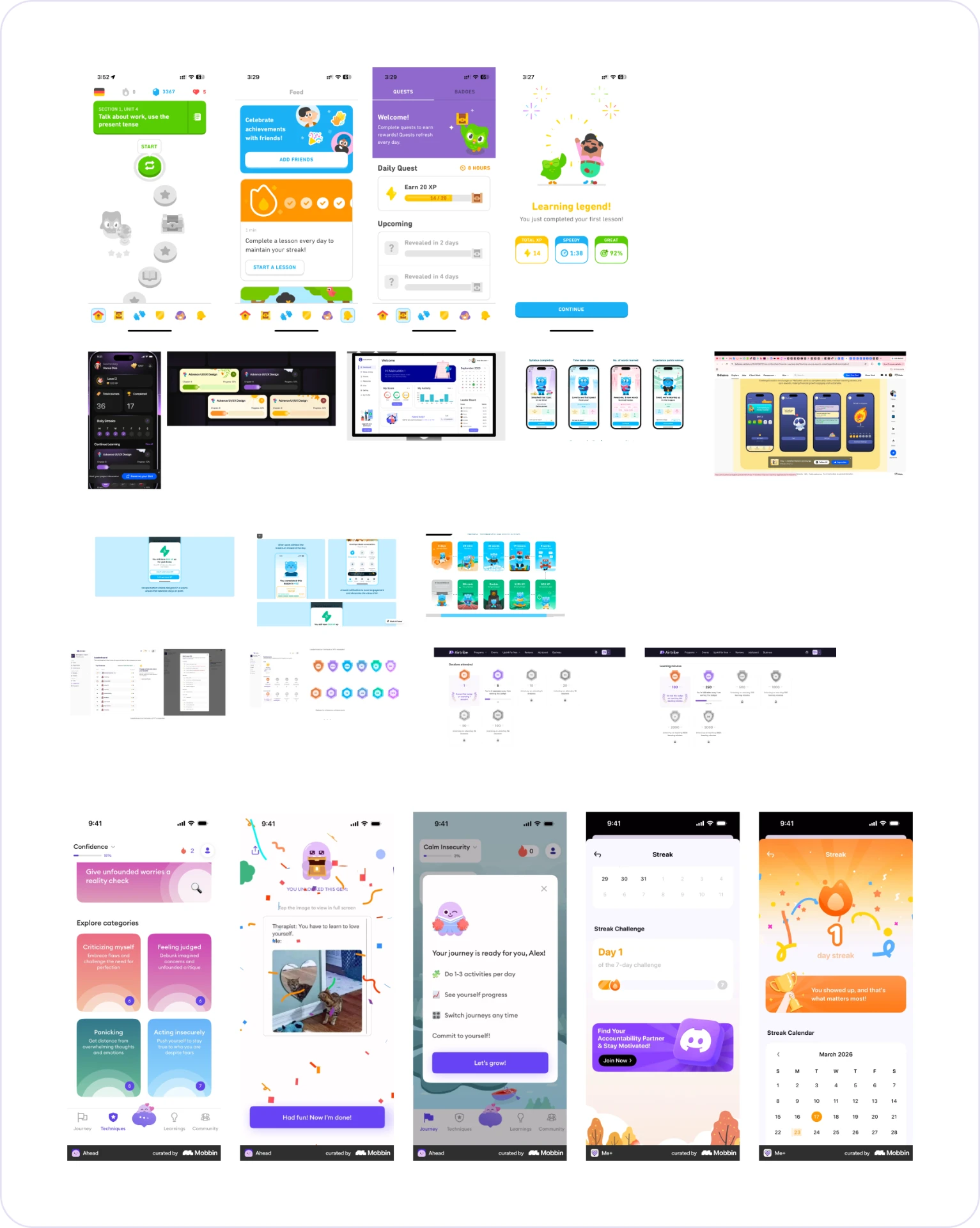
What I explored
Plus two reads: Duolingo’s and Yousician’s gamification case studies
Key insights
- Feedback has to be immediate
- Rewards work best when tied to progress
- Progress needs to feel visible
- A reward means more when the child actually earned it
04 · Design Concept
Answer the three questions every kid asks
“What should I practise today?”
↓
A clear daily practice plan“How did I do?”
↓
Instant, friendly feedback“Why come back tomorrow?”
↓
Visible progress + collectible cardsUser flow
Mapping the journey from finishing a live class to unlocking a new card.
Swipe to explore the flow →
05 · Iterations
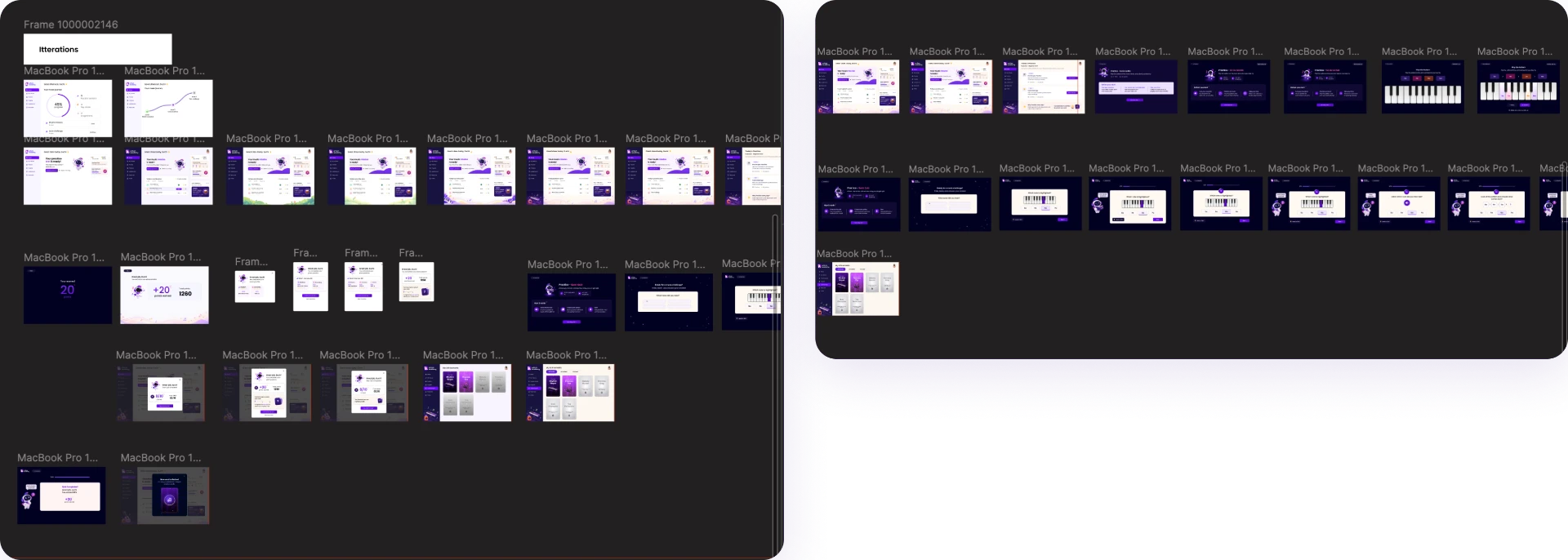
Exploring before deciding
A few early directions for the dashboard before landing on the final layout.
06 · Final Designs
From opening the app to unlocking a card
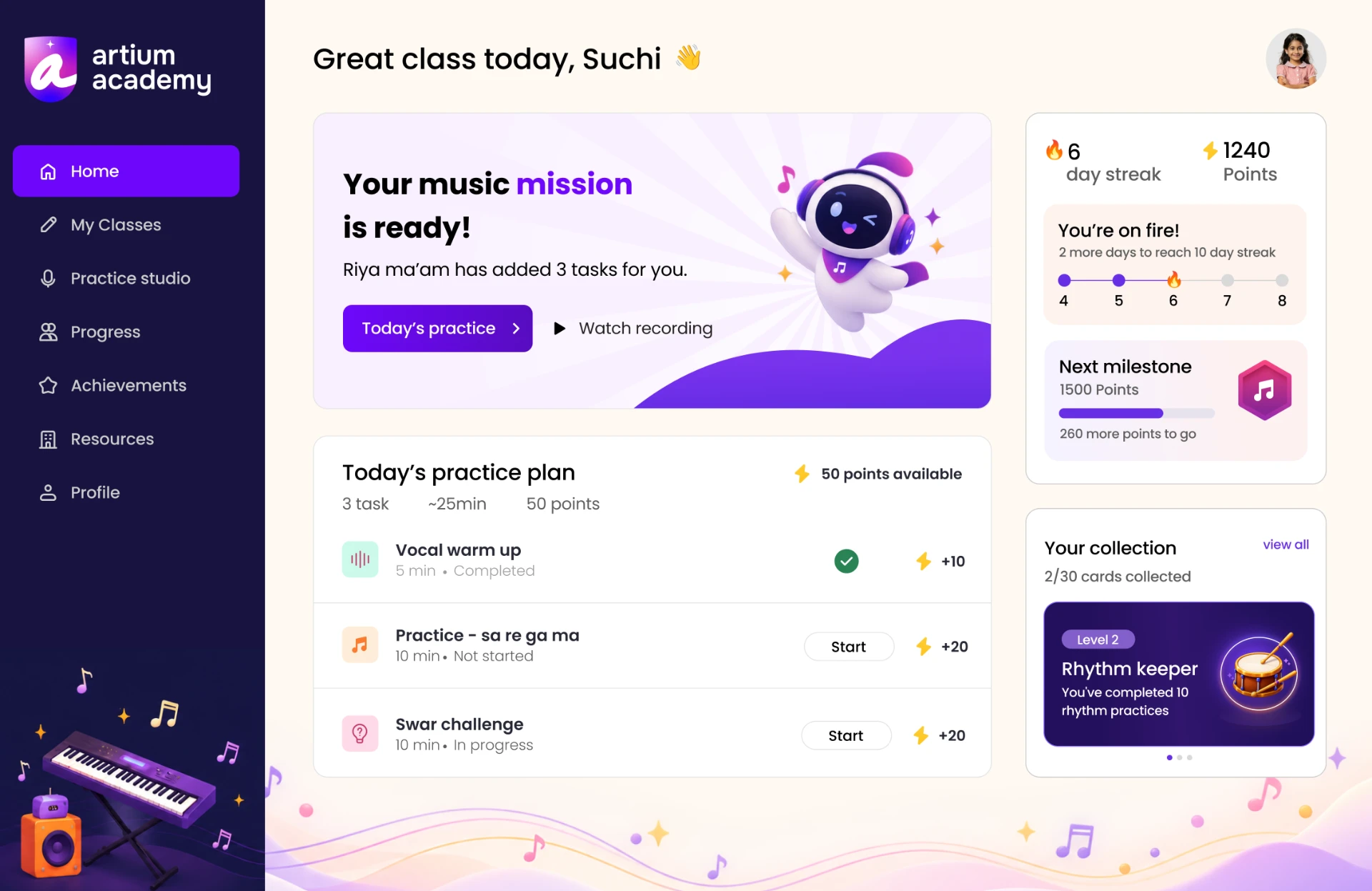
A home screen that feels like a mission, not a to-do list
- A greeting and mascot make it personal before practice even starts.
- Streak and points sit on the first screen, so every effort feels part of a bigger journey.
- The day is broken into a few small missions — kids never have to think about the whole course.
- Playful visuals keep a busy page from feeling heavy.
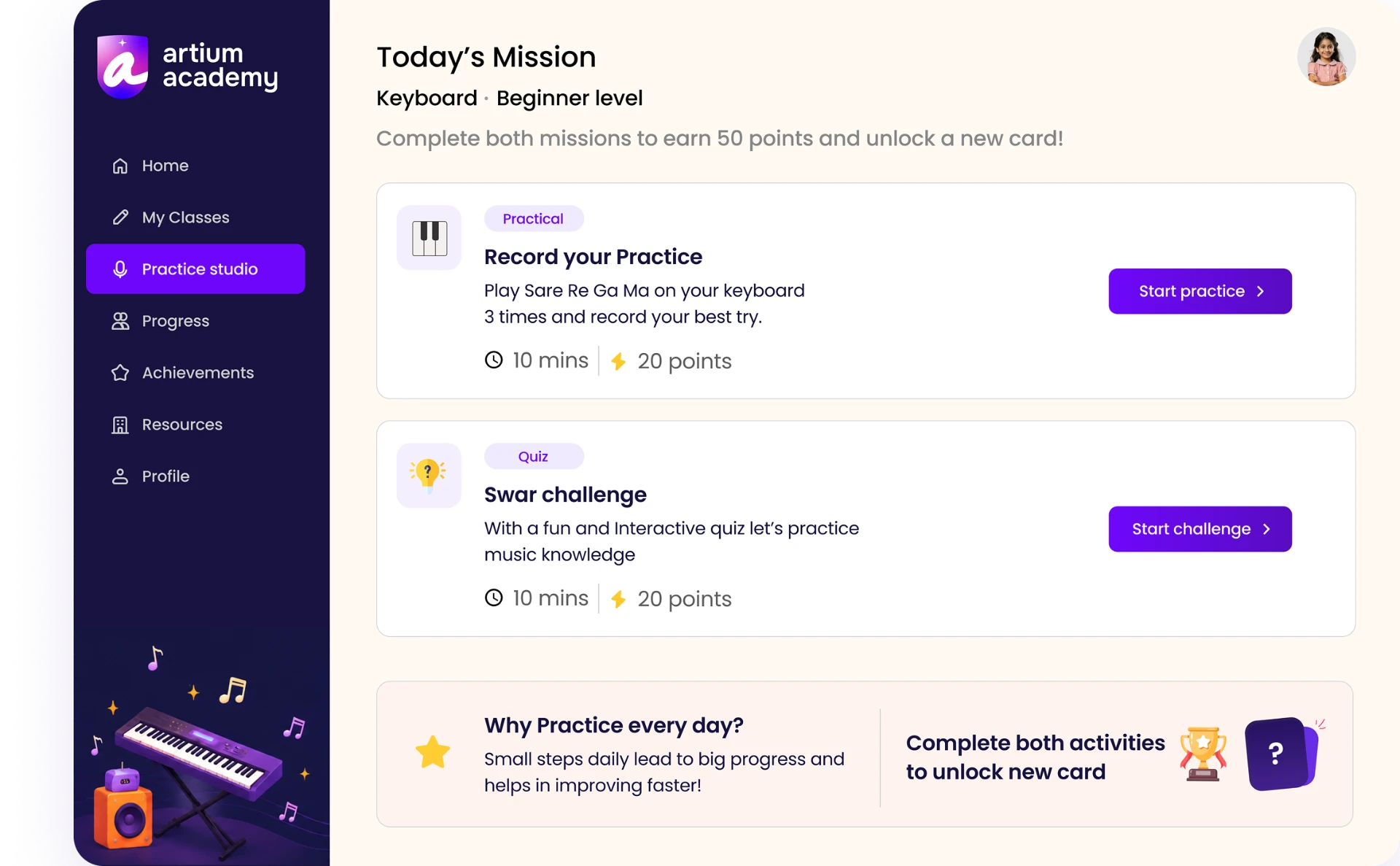
“Missions” instead of tasks
- A small word change that makes practice sound exciting for this age group.
- Each mission shows clear tags and the points on offer.
- Awards and a bit of suspense keep kids on track.
- A gentle reminder links today’s practice to long-term improvement.
Practice that feels like a game, not an exam
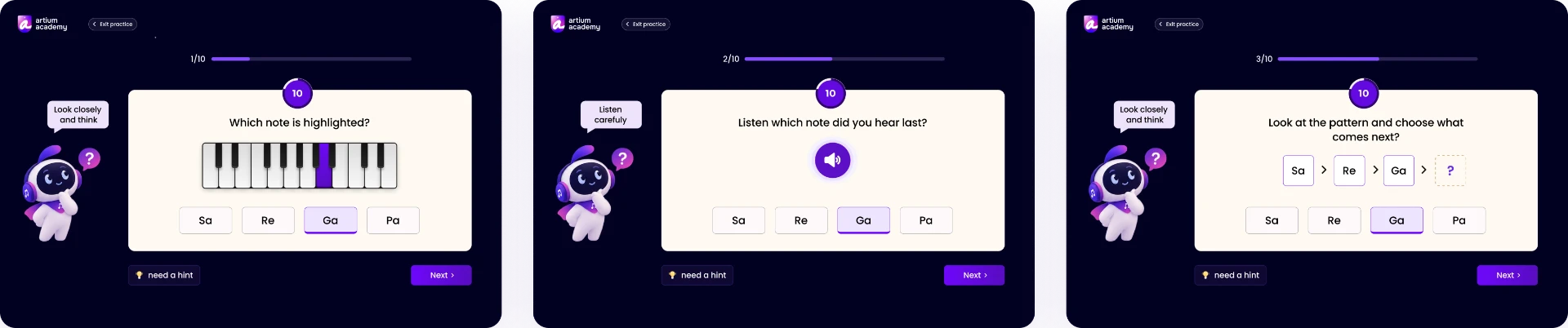
Light, like Duolingo
Short questions and instant interaction keep it playful.
Many ways to test
Visual, listening and pattern questions — not endless MCQs.
Kids stay involved
They look, listen and choose, so they’re actually thinking.
Little cheers along the way
Points, hints and the mascot encourage them as they go.
Clear before, encouraging during
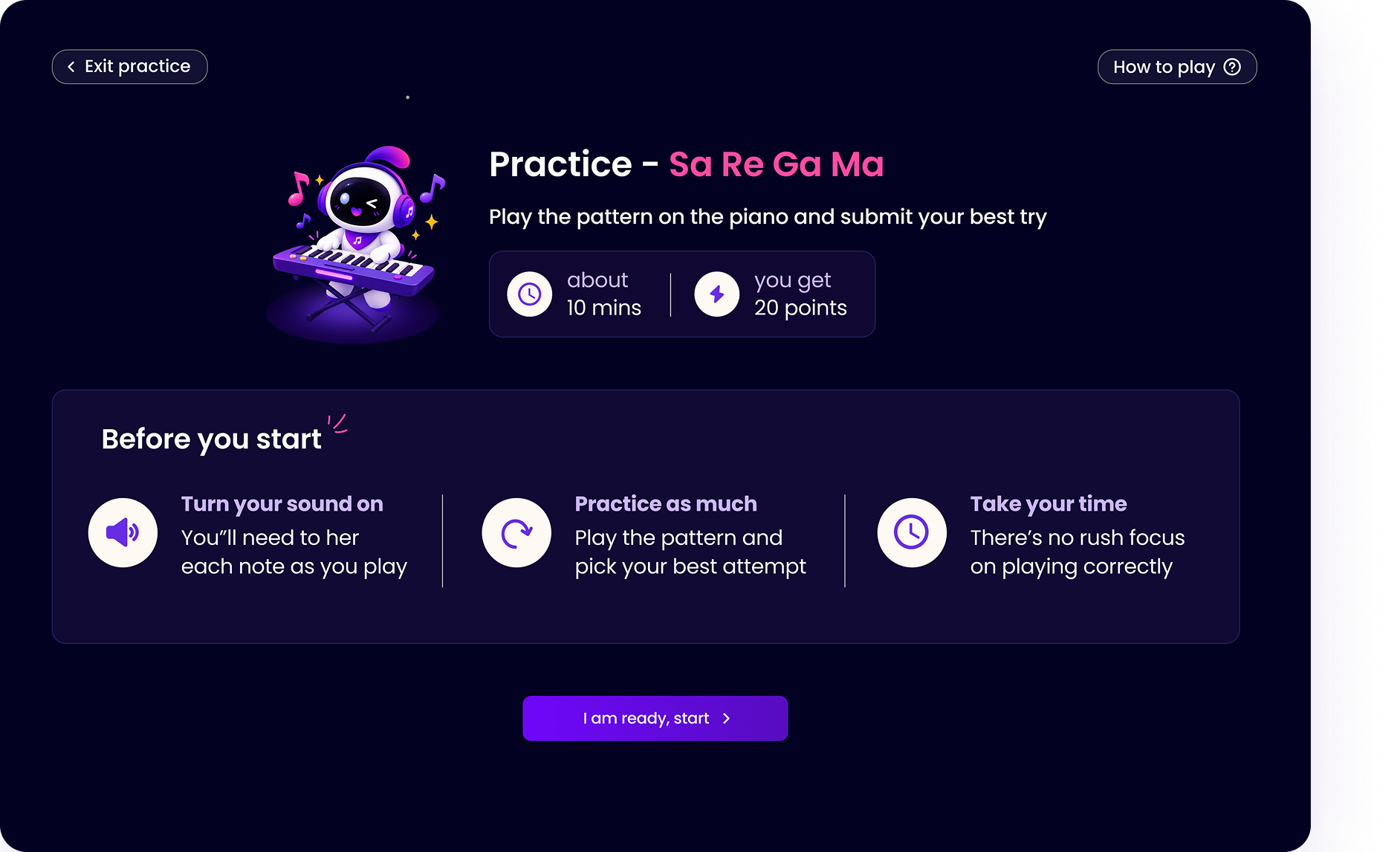
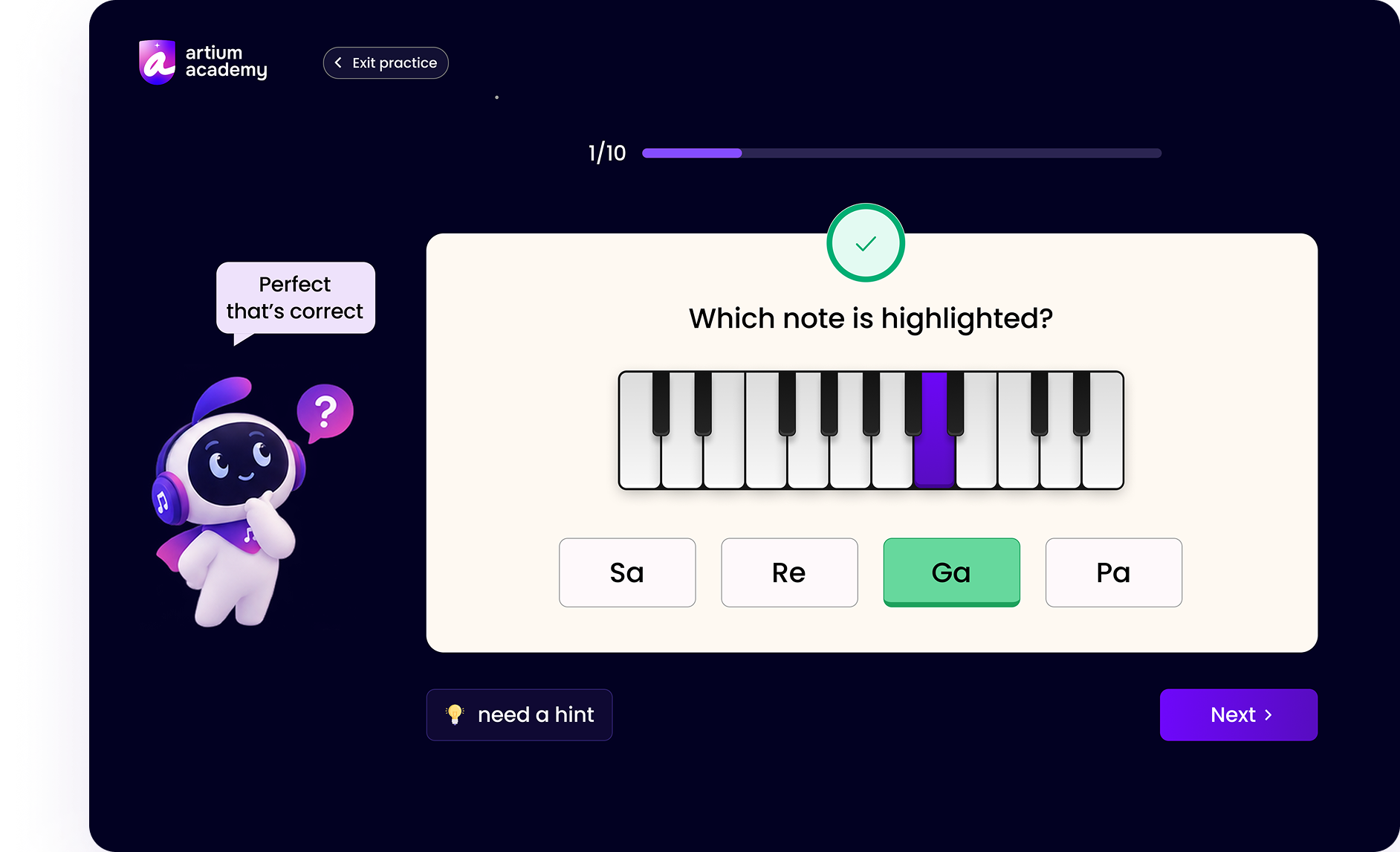
Low cognitive load
Instructions show up before the activity starts,
so there’s no confusion mid-way.
Feedback on the go
The mascot reacts as they answer —
not just after they finish.
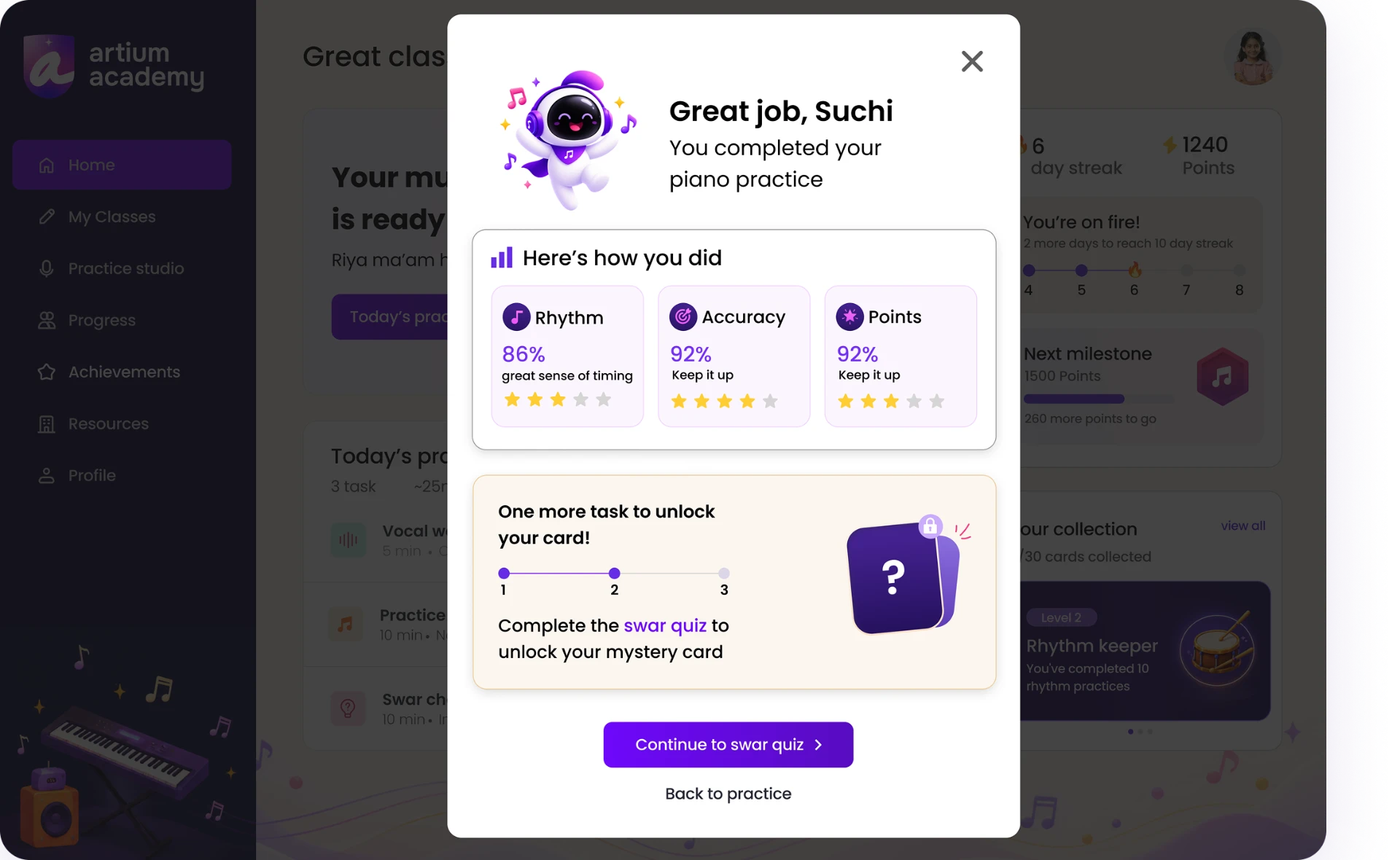
Celebrate the effort first, then show the score
- Praise comes first — finishing is the win.
- Rhythm and accuracy show what went well and what to work on.
- Card progress gives a reason to keep going instead of ending at a score.
- A mystery card sparks curiosity about what’s next.
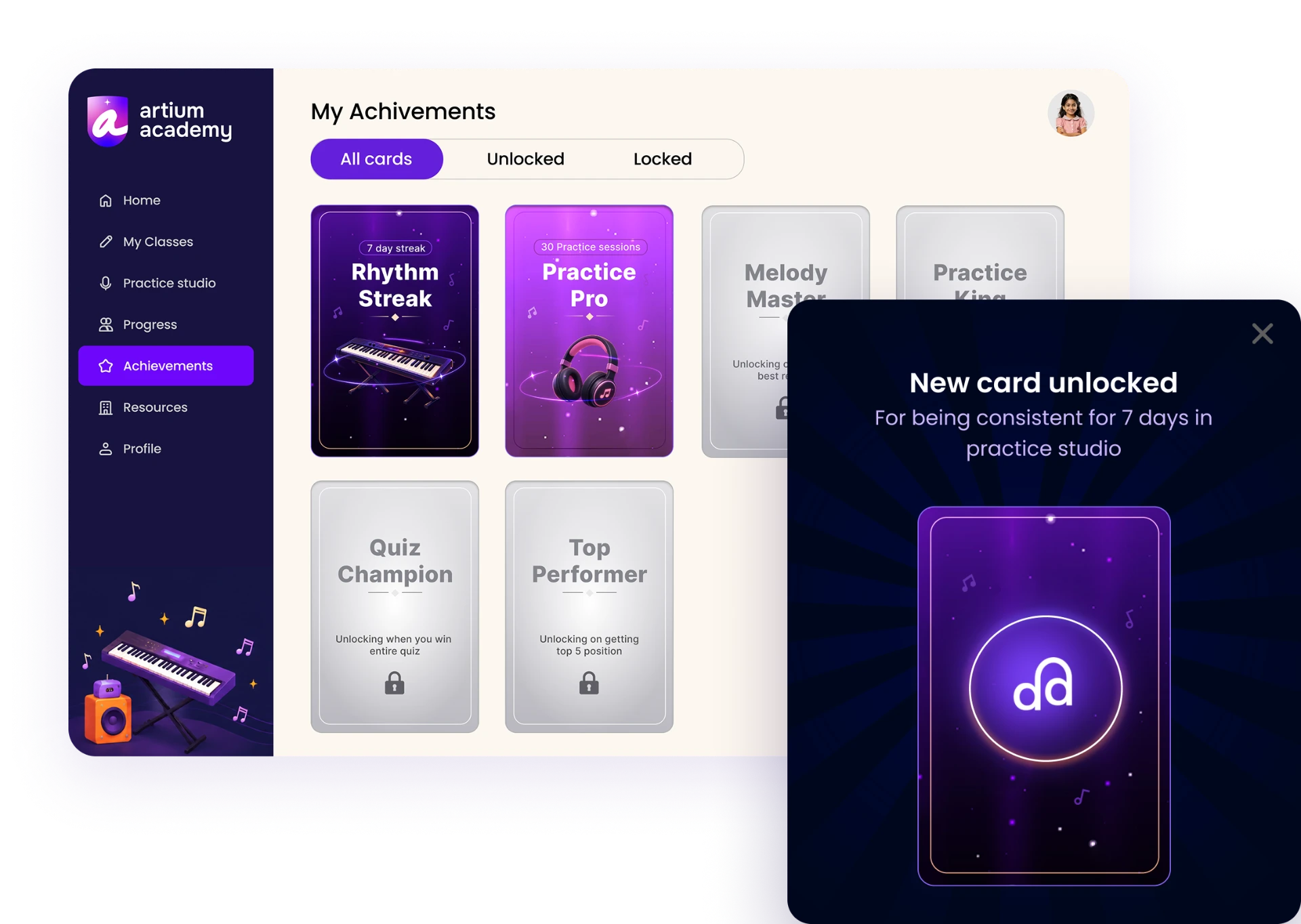
Achievements worth collecting, not just earning
- Each card is a different instrument — not another badge or number.
- Inspired by the thrill of collecting Pokémon cards as a kid, made fully music-focused.
- Locked cards stay hidden on purpose, so curiosity stays alive.
07 · Takeaways
What I learned
Small steps start habits
Breaking practice into a few missions makes it easy to begin.
Rewards need meaning
Cards tied to real progress feel earned, not handed out.
Kind feedback keeps kids trying
Encouragement during practice matters more than a perfect score at the end.
See it in action
Click through the full prototype from the dashboard to unlocking a new card.
View Prototype
Thanks for reading